Article: 1st Draft
- shiraavidan77
- Apr 7, 2023
- 2 min read
Updated: Sep 2, 2023
As of now, I have finished the last stage of designing my magazine before revisions—creating my article. During this process, I applied all of my knowledge about InDesign that I acquired from creating my cover and table of contents, in hopes of creating a highly sophisticated article. The final drafts, process, final choice, and codes and conventions are outlined below.
drafts
Variation 1

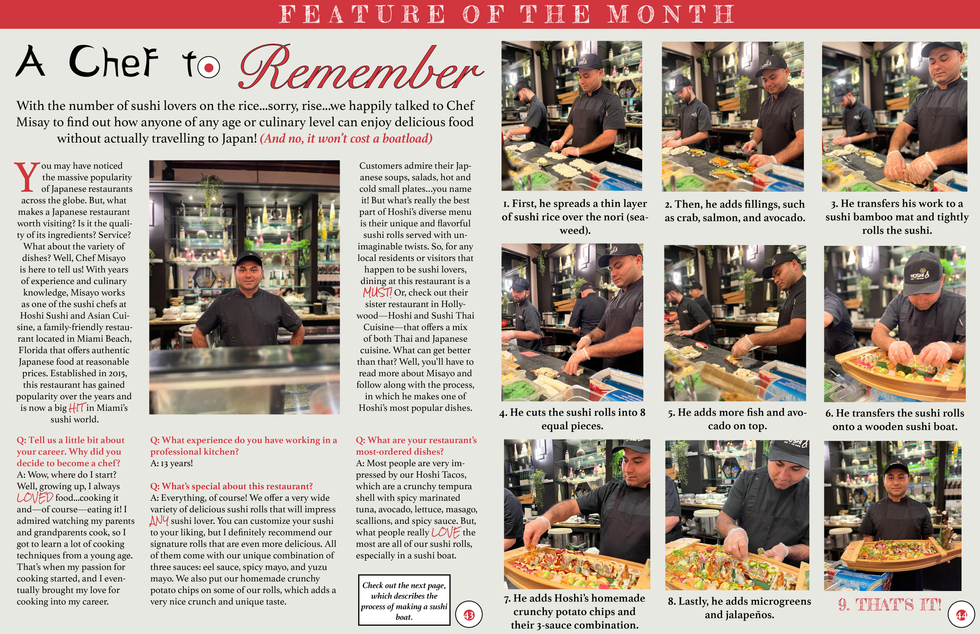

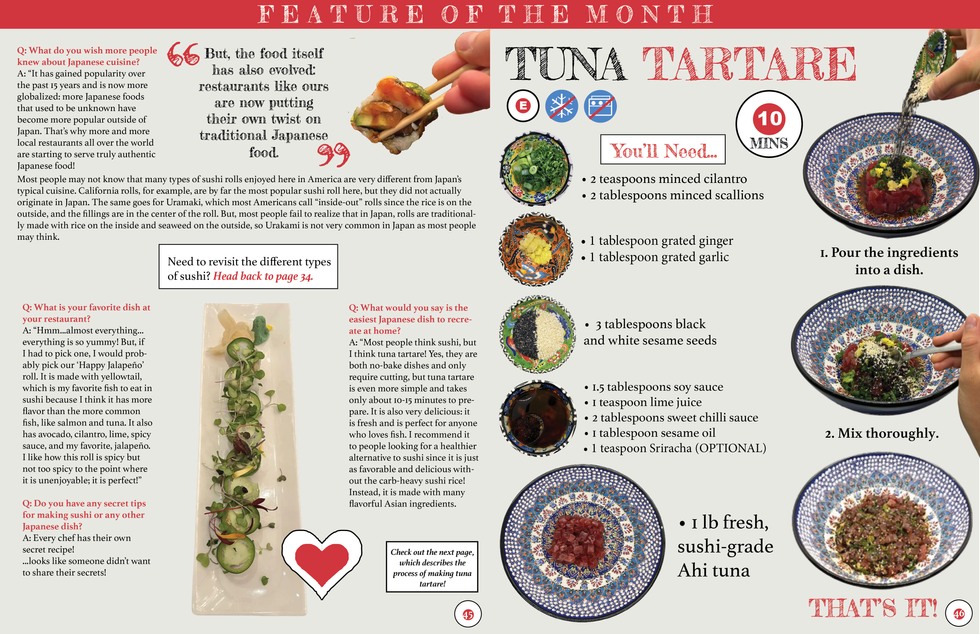
Variation 2


The differences between the first and second variations are described below.
VARIATION 1 | VARIATION 2 (CHANGES MADE) | WHY? |
1. The interview questions are written in the font, Athelas. 2. The ingredients are listed separately and are positioned near the image it describes. 3. The recipe's total prep time is laid out in a circle. 4. The pull quote on page #45 (the third page of the article) has no background. 5. In the "You'll Need" section on the last page, the word "optional" is capitalized, unitalicized, not bold, and black. | 1. The interview questions are written in the font, Fredericka the Greatest. 2. The ingredients are listed together above the images. 3. The recipe's total prep time is laid out in a rectangle. 4. The pull quote on page #45 (the third page of the article) has a white background. 5. In the "You'll Need" section on the last page, the word "optional" is uncapitalized, italicized, bold, and red. | 1. I thought the font of the questions and answers was too similar. Therefore, I thought that changing the questions' font to one that was more contrasting would make the questions more distinct. 2. Most cooking, food, and beverage magazines list their ingredients in one paragraph/column, allowing them to be neat, well-structured, and clear ("not all over the place"). 3. I believed that the circle did not fit with the overall layout, especially since it did not align with any other magazine element. 4. I thought that a white background would make the pull quote stand out more, leading to a higher chance of capturing the target audience's attention. It also adds legibility since it is more visually appealing and allows for a strong contrast against the background. 5. I thought that a significant change in typography would allow the word to stand out more, especially since black and red are contrasting colors. |
Process
Out of my cover, table of contents, and article, creating my article was undoubtedly the easiest part. Although it was the most extensive in terms of pages and body copy, having significantly more experience meant I was more familiar with InDesign's complex tools and magazine codes and conventions. Therefore, navigating InDesign wasn't as hard as it used to be, meaning this process was able to run much smoother with fewer difficulties.
Please watch the video below, which demonstrates the creation process of my article. NOTE: This video only demonstrates the creation of the first two pages of my first variation!
FINAL CHOICE
After thoughtful consideration, I have decided to select the second variation of my first article draft out of the two variations I created. My reasons are as follows:
I like how, unlike the first variation, all of the ingredients are positioned together in one column rather than being separated and placed near the image they describe. As it creates a more legible layout, my target audience would be able to identify the components of this recipe with ease!
I feel that the following changes make the overall layout more visually appealing: adding a white background to the pull quote, changing the circle with the recipe's prep time to a rectangle, and using different fonts. Therefore, the article's magazine elements and necessary parts of the body copy are able to be clearly emphasized.
CODES AND CONVENTIONS
As I tried to make my article realistic as possible, it uses several codes and conventions of the cooking, food, and beverage genre. These are demonstrated in the image below!


Comments